West Virginia Motorcycle Accident Lawyer
Experienced Motorcycle Accident Attorney in West Virginia
When a West Virginia Motorcycle Accident Leaves You Facing the Insurer Alone
A motorcycle crash can put you in the hospital in seconds, and insurance adjusters often blame the rider before checking the facts. Before you sign anything or speak to an insurance company, you need to know your rights and options.
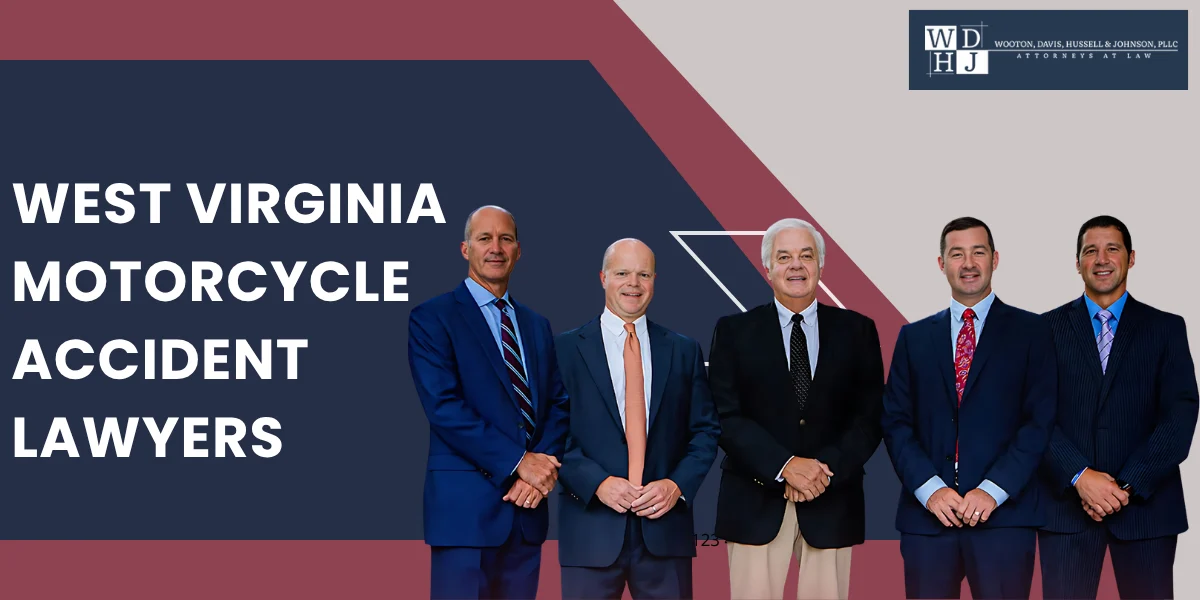
Wooton, Davis, Hussell & Johnson represents injured riders across West Virginia, covering Raleigh, Kanawha, and Greenbrier counties. With offices in Beckley, Charleston, and Lewisburg, you don’t have to travel far to get help. Motorcycle accident claims are handled as part of our broader personal injury practice.
Tell us what happened. We’ll review your case and help you figure out your best options before you talk to an adjuster.
| 100+ Years Combined Experience | Super Lawyers Recognized | 4.7/5 Client Rating | 3 WV Offices |
The Kinds of West Virginia Motorcycle Crashes We Take On
A motorcycle case is rarely just about the crash itself. It is about proving fault before the insurance company decides the story on its own. Our attorneys handle:
- Crashes caused by a driver who failed to see the motorcycle
- Crashes caused by potholes, loose gravel, or road debris
- Claims against a government agency responsible for a dangerous road
- Cases involving defective motorcycle parts, such as brakes or tires
- Wrongful death claims for families who lost a rider
Each type of claim depends on different evidence. We know which facts matter for yours.
Why West Virginia Motorcycle Riders Get Blamed Before the Facts Are In
Insurance adjusters treat a motorcycle claim differently than a car accident claim. They often assume the rider was speeding or riding too aggressively. They make that assumption before they even read the police report.
West Virginia law does not let them get away with that assumption alone.
Under West Virginia’s modified comparative fault law (W. Va. Code §55-7-13a and §55-7-13c), you can still recover compensation. You just need to be found 50 percent or less at fault for the crash. Push your share of blame past that line, though, and you lose the entire claim. You do not just lose part of it.
West Virginia also requires every rider and passenger to wear a helmet. If you were hurt and were not wearing one, the other side may use that against you under general comparative fault principles, not because the helmet statute itself creates that rule. They may try to blame your head injury on the missing helmet, even when the crash was the other driver’s fault. Knowing how to counter that argument matters as much as proving who caused the crash.
This reflects West Virginia law as of August 2026. We review this page every quarter to keep it current.
The West Virginia Turnpike Corridor and Where Motorcycle Crashes Happen
The stretch of I-77 and I-64 between Charleston and Beckley is known locally as the West Virginia Turnpike. Multiple independent crash-rate reviews have named this corridor among the state’s more hazardous stretches for any vehicle, and its narrow lanes, sharp curves, and steep grades make it especially unforgiving for a motorcycle.
U.S. Route 19, also called Corridor G, covers similar ground. Federal crash-rate data has flagged Route 19 as one of the state’s higher-risk highways, especially where it narrows down through Beckley.
Our three offices sit inside that same corridor, in Beckley, Charleston, and Lewisburg. That means we cover Raleigh, Kanawha, and Greenbrier counties. If your crash happened on the Turnpike, on Route 19, or on a back road in Greenbrier County, we already know the terrain. We also know the local courts and the adjusters who work these claims.
Motorcycle Accident Claim Questions From West Virginia Riders
Will the insurance company automatically blame me for the crash?
No. Under West Virginia’s modified comparative fault rule, the insurer has to prove your share of fault. It cannot use that share to deny your claim unless you are found more than 50 percent responsible.
How long do I have to file a motorcycle accident claim in West Virginia?
You generally have two years from the date of the crash to file a lawsuit. Waiting past that window usually means losing your right to recover anything at all.
Does riding without a helmet ruin my case?
No. West Virginia requires helmets, but going without one only affects your case if the other side proves it caused or worsened a specific injury. It does not bar your claim on its own.
What if my crash happened on the West Virginia Turnpike or Route 19?
We already know these corridors and the county courts that handle claims from them, from our offices in Beckley, Charleston, and Lewisburg.
What if a pothole or road hazard caused my crash?
You may have a separate claim against the government agency or property owner responsible for maintaining that stretch of road, though claims against a state or local government come with shorter notice deadlines and specific immunity rules under the Governmental Tort Claims and Insurance Reform Act that do not apply to a claim against a private driver.
What does it cost to hire a motorcycle accident lawyer?
We work on a contingency basis. You pay nothing upfront, and nothing at all unless we recover compensation for you.
What should I do in the days right after a motorcycle crash?
Get medical care first. Then avoid giving a full statement to any insurance adjuster until you have talked to an attorney.
Can I use my own health insurance while my claim is pending?
Yes. You can use health insurance or MedPay coverage while your case is open. We help sort out any reimbursement once your claim resolves.
Do I have to go to court to settle a motorcycle accident claim?
Most claims settle without a trial. We prepare every case as if it will go to trial, though, since that preparation is what pushes an insurer toward a fair number.
If your situation raises something the questions above didn’t cover, reach out and walk us through it.
West Virginia Motorcycle Accident Blog Resources:
- Most Dangerous Roads and Intersections in West Virginia
- West Virginia Personal Injury Statute of Limitations
West Virginia Motorcycle Accident Legal Resources:
- W. Va. Code § 17C-15-44 — Motorcycle Helmet Requirement
- West Virginia DMV — Motorcycle Licensing and Safety
- NHTSA — Motorcycle Safety Data
Get a Straight Answer About What Your West Virginia Motorcycle Accident Claim Is Worth
You don’t have to guess at what your case is worth. You don’t have to accept the first number an adjuster offers. Our attorneys have represented injured riders throughout Raleigh, Kanawha, and Greenbrier counties, and we charge nothing upfront.
Contact our team to schedule a free case review and find out where you stand.

© Copyright 2026 Wooton, Davis, Hussell & Johnson, PLLC. All rights reserved.
*Images are obtained under license from Canva and other third-party stock image providers, with attribution included where required.
Digital Marketing By 
Please complete the CAPTCHA